A Government Without Minutes
For two months, the General Assembly has met, just not in public record.
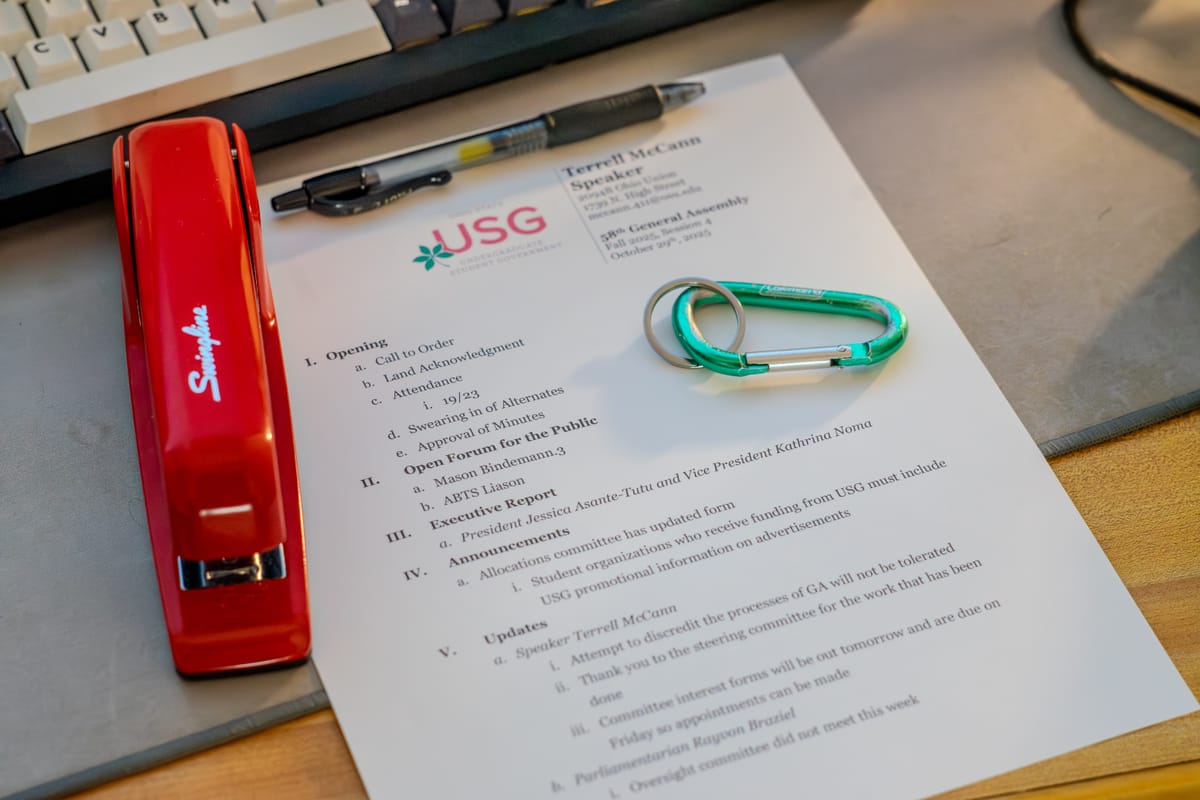
The 58th General Assembly of Ohio State's Undergraduate Student Government began its term on October 1, 2025. As of Monday, December 8, more than two months later, not a single meeting agenda or set of minutes from the current term has been posted to the USG website.
This stands in notable contrast to the outgoing 57th General Assembly, which maintained a detailed public record throughout its tenure. The absence of these foundational documents raises questions about institutional transparency and the administration's approach to public accountability.
"Already Being Done"
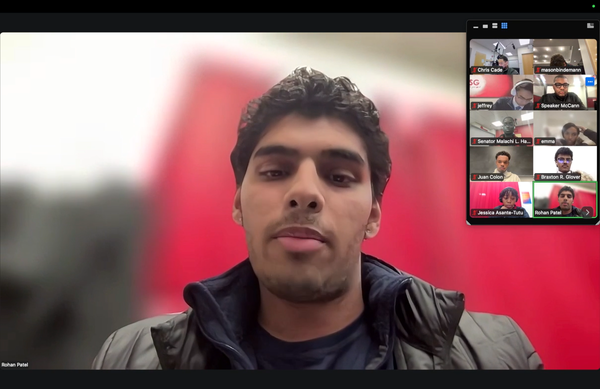
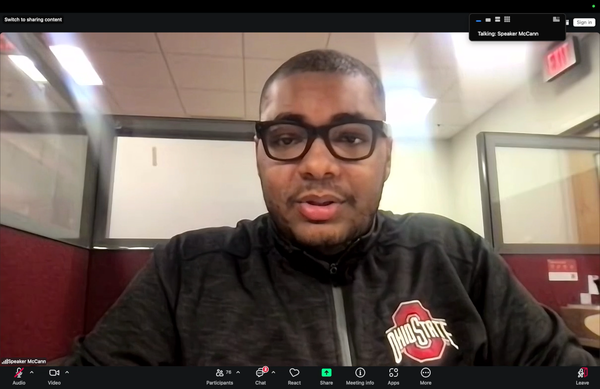
At the December 4 General Assembly meeting, I raised concerns during public forum about the inaccessibility of meeting records. Speaker Terrell McCann responded with confidence: "That is a current practice that is already done, but there has been some issues with website access."
He assured attendees the matter was "already something that is in the process of being worked on" and would be resolved "very soon as we get the website access."
Four days later, the website remains unchanged. As of December 8, the agendas page still lists materials from the 57th General Assembly, with the most recent posting dated February 12, 2025, before even the interim administration took office following spring elections. The minutes page shows the same outdated information, still directing visitors to contact former Interim Secretary Lily Evans with questions.
The website instructs readers to direct all agenda-related questions to Rayvon Braziel, who retained his role as parliamentarian from the 57th General Assembly's interim administration into the 58th. Yet during his entire tenure not a single agenda has been posted.
A Pattern of Confident Incorrectness
This isn't the first time Speaker McCann has made statements that proved inaccurate. At the November 12 meeting, McCann challenged my budget figures during public forum, insisting they were incorrect. The CSA chair would later confirm those figures were accurate.
When leadership makes statements about matters easily verified by public record, or lack thereof, this raises questions about their accuracy on less transparent issues.
The current state of the USG website reflects an administration that has not yet completed one of its most basic transparency obligations. Every page dealing with General Assembly records remains frozen in the summer, despite a new term having begun in October.
When contacted for comment on December 3, Senior Director of Operations Audrey Kralic clarified that her team "does not handle updates to GA agendas or meeting minutes." She explained that "GA Leadership has been working through some access issues with the website" and expected to gain access "soon."
Transparency by Request Only
Meanwhile, students seeking to review what happens in General Assembly meetings must email Secretary Jayda Williams directly for copies of minutes. Williams did not respond to a request for comment sent December 1.
This arrangement places a significant burden on the Secretary, who must field individual requests for documents that should be publicly available. It also creates an unnecessary barrier for constituents who shouldn't need to personally petition their government for basic transparency.
Former Interim Secretary Lily Evans, who maintained the detailed minutes of the late 57th General Assembly, also did not respond to a request for comment. Neither did Sharika Thaploo, who served as Secretary earlier in the 57th GA and now appears to hold a seat in University Senate as a USG senator.
A Tale of Two General Assemblies
The difference between the 57th and 58th General Assemblies extends beyond availability of records to their content and detail.
Minutes from the 57th GA vacancy session on September 11, 2024, provide a comprehensive account of proceedings, including individual senator questions to applicants, specific exchanges during deliberation, and the substance of discussions that informed voting decisions.
The 58th GA vacancy session minutes from October 29, 2025, take a different approach. They list applicants and vote tallies but omit the debates and considerations that led to those outcomes.
During the October 29 meeting, I addressed the General Assembly during public forum about my denied senator application, discussing my campus involvement and asking why I received no substantive feedback from the steering committee. After I left, Speaker McCann responded from the chair, stating that "undermining USG will not be tolerated."
The Lantern covered both exchanges in detail. The official minutes reduce my entire public forum speech to a single line reading "Mason Bindemann.3", a formatting artifact that records I spoke but not what I said. McCann's response, however, is preserved, stating "Attempt to discredit the processes of GA will not be tolerated," providing his rebuttal without the remarks he was rebutting.
Oliver Griffith, who served as Parliamentarian and interim Speaker during the 57th General Assembly, addressed the difference in approach when contacted on December 1. "It was very important to the leadership of the 57th General Assembly to provide detailed minutes, so future readers can understand the bills and resolutions that were passed," he wrote. He noted that if new leadership chooses to limit the minutes, "they are either low effort, or, at worst, hiding their intentions or language."
The Outlier
One set of 58th GA minutes stands apart from the rest: those from Session 5, compiled by Senator Braxton Glover while Secretary Williams was absent.
Glover's minutes capture motions, debates, speaker remarks, and votes with a level of detail absent from Williams' other work. They read like what minutes should be: a comprehensive record of institutional action and deliberation.
When asked about his approach, Glover explained he "based the format and content of the minutes off of the past work of Secretary Williams, particularly the minutes of Session 4." He emphasized that "the purpose of minutes in any body, including the General Assembly, is to serve as a record of the happenings of session."
"The Undergraduate Student Government at The Ohio State University has always sought to make things as transparent as possible," Glover added.
Yet that transparency has been notably absent this term. The 58th GA has produced minutes that feel more like timestamped agendas with procedural details grafted on, brief summaries rather than substantive records.
There are occasional improvements: recent minutes note vote margins rather than simply recording whether someone was elected. But overall, the documentary standard has declined noticeably.
What Minutes Should Be
The 57th General Assembly's minutes captured full quotes from debates, specific questions and responses, and the substance of legislative consideration. They included granular details that helped constituents understand not just what their representatives voted for, but what they said and thought in the process.
The difference is stark. The 57th GA's records felt like a comprehensive institutional memory. The 58th's feel like an agenda with some procedural notation.
This matters because meeting minutes serve as the first draft of USG history. They are how future students, researchers, and constituents will understand what this General Assembly stood for and what it accomplished. If those records are incomplete or perfunctory, that history is lost.
When contacted for comment on December 3, the Office of Speaker McCann issued a brief response: "Thank you for reaching out for comment. The Office of Speaker McCann has received your message, and your concern has been noted. We are working to address the matter internally and will move forward as appropriate. At this time, we will not be providing further comment."
The General Assembly leadership manages its own documentation and communication processes, as Kralic made clear. The administration has had two months to post these records. Whether and when transparency will be restored remains to be seen.