
The Undergraduate Student Government's effort to establish formal representation for regional campus students hit a procedural snag last Tuesday, as senators voted to send Resolution 58R12 back to the Oversight Committee for additional development after nearly an hour of debate.
The resolution, sponsored by Senator Malachi Hardison, would create a Regional Campus Affairs Committee in both the executive and legislative branches to advocate for students at Ohio State's Newark, Lima, Marion, Mansfield, and Wooster/ATI campuses. Under the proposal, the committee would begin as a pilot program focused on Newark before expanding to other regional locations.
"Regional campuses, they are lacking representation from the Undergraduate Student Government," Hardison told the General Assembly. "This resolution is going to allow us a step further to ensure that all regional campuses are being represented effectively."
A Personal Mission
For Hardison, the issue is deeply personal. In an interview following Tuesday's session, he described his experience beginning his Ohio State education at the Newark campus, where he was waitlisted for a required math class because another student, who never attended, held the spot for two weeks.
"I thought about the other people who also are in situations where they can't do anything and their future is being dictated by university policy," Hardison said. "As an advocate for students, I'm like, what is a way? How can I change this issue?"
That experience led him to discover USG, an organization he said many regional campus students don't know exists. After filling a vacancy to become regional campus senator in his first term, Hardison said he struggled to represent all four campuses alone.
The Regional Campus Affairs Committee, he explained, would create a dedicated team to address issues like limited funding for student organizations, understaffing, and what he described as a pervasive "disconnect from Ohio State."
"The disconnect from Ohio State, not only the distance, but the way it was run," Hardison said. "There really was not a lot of student life. The campus was not as lively as Columbus."
The Proposal's Provisions
Resolution 58R12 would establish issue committees in both the executive and legislative branches dedicated to regional campus concerns. A new Executive Director and Legislative Coordinator would work with campus administrators to surface campus-specific issues and "foster a stronger connection between regional and Columbus campus students."
The resolution notes that President Ted Carter's Regional Campus Commitment Program, which will cover tuition and mandatory fees for low- to middle-income students starting at regional campuses beginning autumn 2026, is projected to increase regional enrollment, "necessitating a need for the Undergraduate Government to expand its presence."
Co-sponsor Senator Jeffrey Liu emphasized that formal approval was necessary before substantive work could begin. "We need to have this approval to get this ship sailing," Liu said during debate. "If you're going to sink our boat before it leaves the dock, we can't do anything past that."
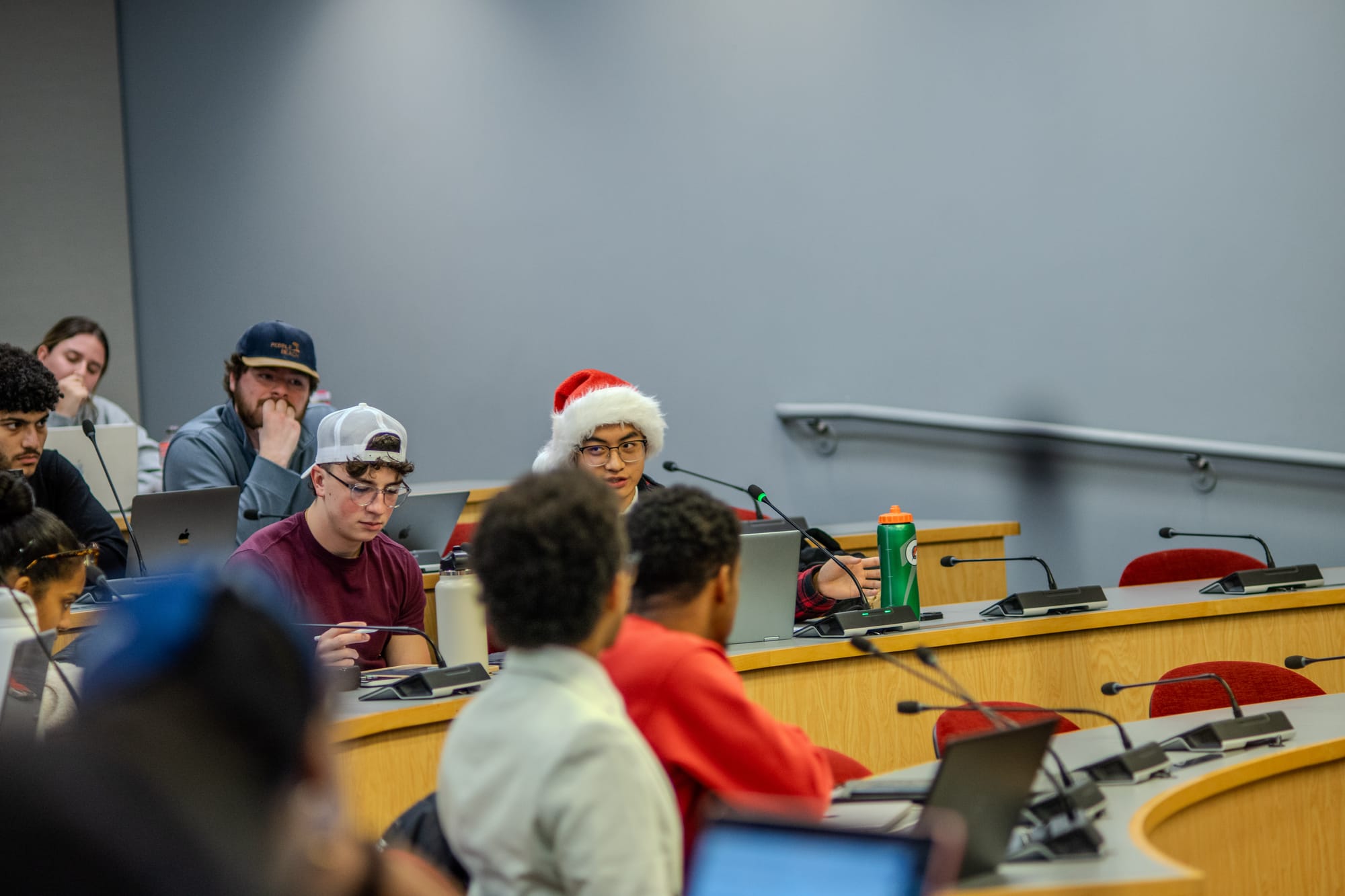
Hardison and Liu said they had already reached out to Newark Campus Dean Matthew J. Smith and John Davenport, director of the Office of Student Life at Newark, to discuss the proposal, including the possibility of establishing a regional Student Activity Fee to fund programming.
Questions of Scope
But as debate stretched past an hour, senators raised repeated concerns about the resolution's specifics. Parliamentarian Rayvon Braziel, who chairs the Oversight Committee, questioned whether USG had concrete data showing regional students wanted this form of representation.
"Where is any data that can prove to me, as a senator, that regional campus students would even participate in this?" Braziel asked. "Have you really talked to students firsthand about whether this would even be impactful at those campuses?"
Co-sponsor Senator Christopher Cade responded by citing a 2023 Student Life survey measuring engagement across campuses, noting that regional students showed nearly 70% lower engagement at campus events compared to Columbus students.
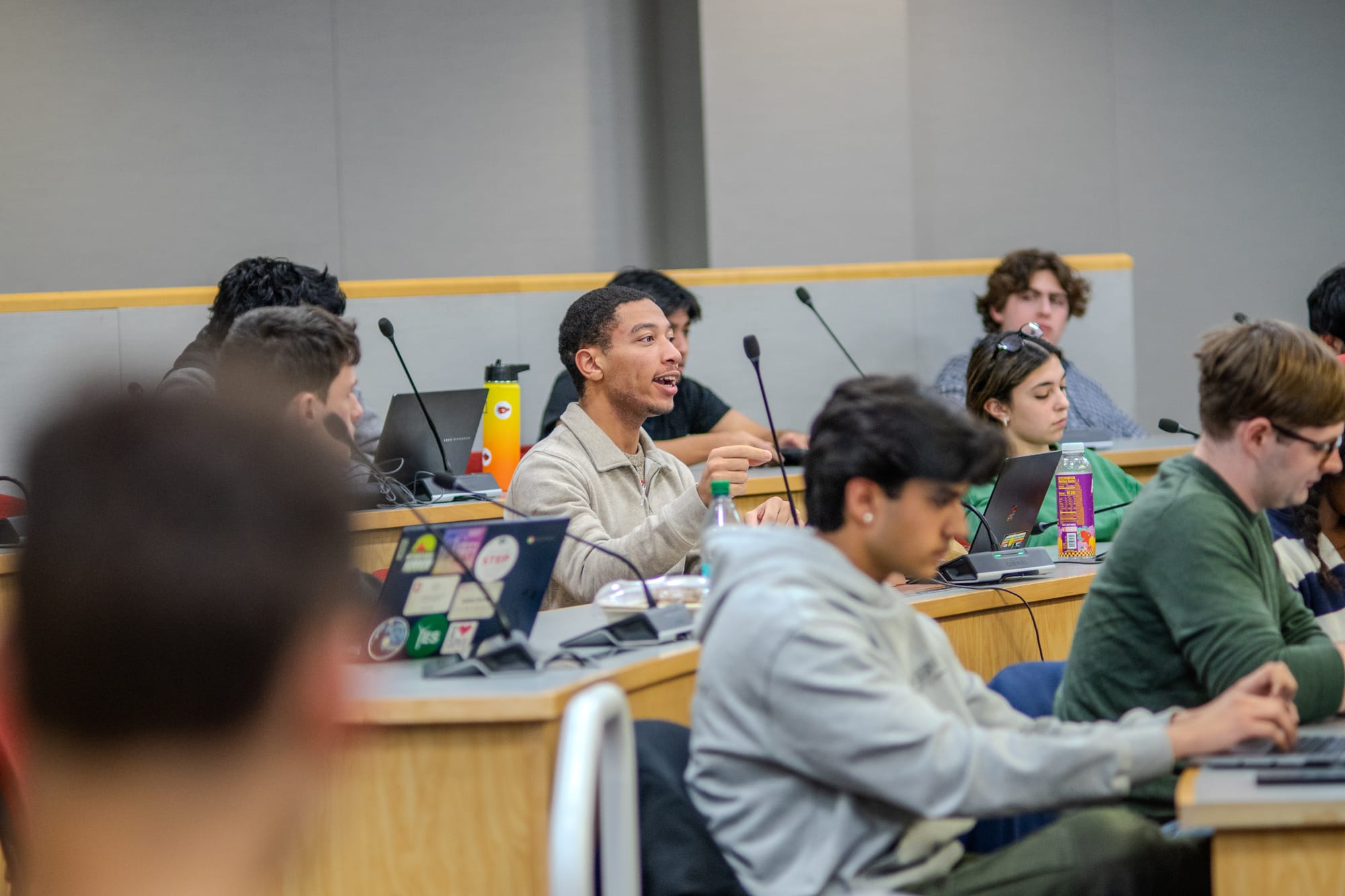
Speaker Terrell McCann pressed Hardison on budgetary concerns, asking whether the pilot program would require funding and where those funds would come from after USG had already passed its spring budget.
Hardison acknowledged he had not yet determined costs, saying those details would need to be worked out with administrators and committee members once the structure was in place.
Co-Sponsor Controversy
A tense exchange erupted when McCann revealed that President Jessica Asante-Tutu and Vice President Kathrina Noma, listed as co-sponsors on the resolution, had not formally agreed to co-sponsor the measure.
"Because it just was my understanding that the President and the Vice President were not co-sponsors of the resolution that you put their names on there," McCann said. "So I was just wondering if you had officially asked them to be co-sponsors before you brought this resolution to the floor."
Hardison acknowledged he had not formally asked, saying he assumed their collaboration during a planning meeting meant they supported being listed as co-sponsors. In an interview with Generally Assembled, he described it as a misunderstanding, explaining he believed collaborative work on the resolution constituted co-sponsorship.
In an email response to Generally Assembled, Noma wrote: "Yes, I see this as a first step towards fuller representation of regional students within USG." She added that the administration would be "working with Senators Hardison, Cade, Liu & Abedrabbo to finalize the details and logistics of what this new committee may look like," but did not address why she was not listed as a formal co-sponsor on the resolution.
Oversight Takes the Reigns
After the motion to table the resolution indefinitely failed, Senator Glover moved to refer it back to the Oversight Committee. The motion passed with 16 votes in favor and one opposed.
Braziel, who voiced strong skepticism during debate, declined to provide comment to Generally Assembled. In an email, he wrote: "I will not be giving a comment to any news outlet other than the Lantern. I would ask that you respect my decision and not, as a man, blast me for said decision on your website."
During the floor debate, Braziel had called the resolution "a shell of what it could be," arguing it lacked definition and accountability. "I think that the logistics are, there's no one to take accountability on," he said. "It has no real definition of what we should be doing. It only has a title."
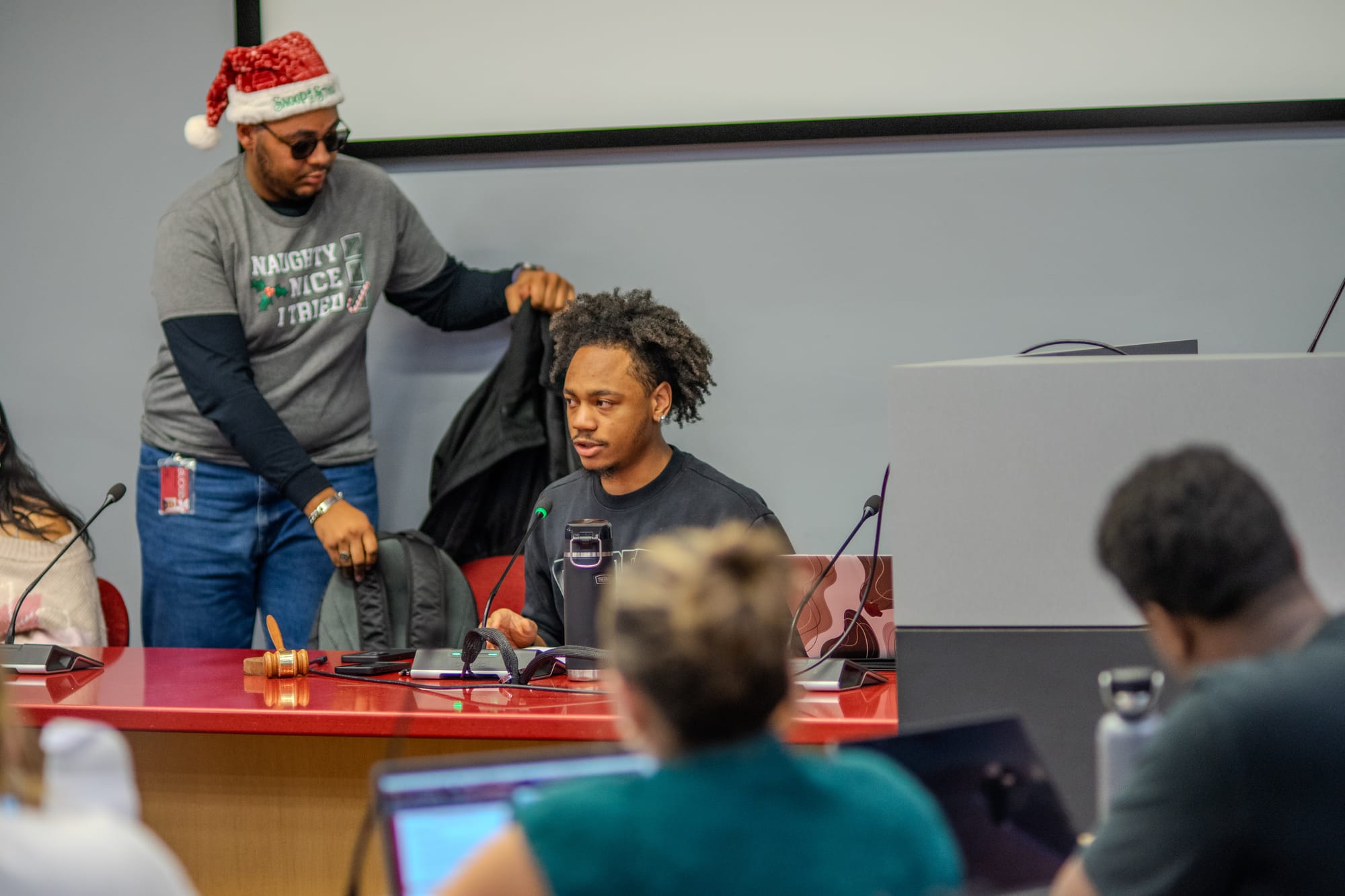
He also questioned whether USG should be responsible for creating student life at regional campuses, rather than letting the university take the lead. "I don't think that we should continue with this," Braziel said. "And quite frankly, I don't think that we should see it again."
Regional Campus Realities
Perspectives from Newark campus staff suggest the challenges are more complex than a single committee might address. MaLisa Spring, advisor for the Campus Activities Board at Newark, noted in an email to Generally Assembled that most clubs at regional campuses "fizzle out quickly due to lack of continuing members the next year."
"It is also worth noting that students who do try to stay on this campus for extra time despite their majors not having 4 year options are often doing so for financial reasons since Newark tuition is cheaper than Columbus," Spring wrote. "Unless we have a lot more local students or more on campus housing, I'd expect a student activity fee to be a hard sell."
Mackenna Finley, Student Activities Manager at Newark, said her office was "working through conversations on this topic" and would provide a response early this week. As of publication, Generally Assembled has not received that statement.
Competing Visions of Representation
Hardison's broader vision extends beyond the immediate committee structure. He described a "Council of Campus Ambassadors", individuals embedded on each regional campus who would report concerns to the regional campus senator, who would in turn bring issues to the Regional Campus Affairs Committee.
"We can't have a regional campus senator for each campus. That's just not going to work," Hardison said. "So that's why the Council of Campus Ambassadors was another idea that we possibly could have to make sure that students have someone that represents them."
Speaker McCann, while acknowledging the importance of regional representation, said the resolution needed more development before passage. "I think that the resolution in this state and the fact that there are a lot of unknowns, it troubles me," McCann said before leaving the meeting. "I think that personally, this resolution needs to go back to the drawing board."
As the resolution returns to Oversight, Hardison said he plans to work with Noma, Asante-Tutu, and co-sponsors Cade, Liu, and Senator Ali Abedrabbo to potentially establish a task force while the committee structure is finalized.
"The longer we wait, the longer they go unrepresented, and I don't want that to happen," Hardison said.


